
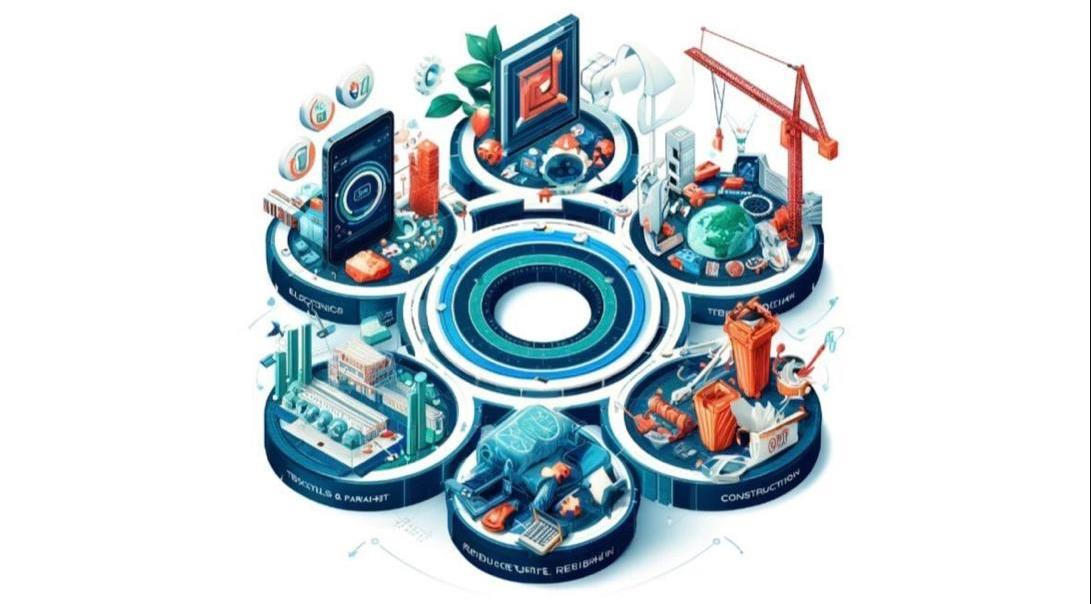
In the electronics, textile, construction, and fashion sectors, the potential impact of adopting a circular economy is substantial.
Electronics:
Transitioning to modular, easily repairable electronics reduces e-waste and recovers valuable materials like rare metals. This shift can drive a surge in startups focused on refurbishing and recycling devices, creating a sustainable ecosystem for gadgets.
Textiles & Fashion:
Circular models like rental, resale, and textile recycling can minimize waste while maximizing resource efficiency. Startups are emerging with creative business models that include second-hand fashion platforms, closed-loop recycling systems, and sustainable materials sourcing.
Construction:
Modular and adaptive building designs, along with the reuse of construction materials, could transform the industry. Startups specializing in material recovery, deconstruction services, and modular construction will help redefine waste management in construction.
Benefits:
- Economic Growth: Startups and established businesses can tap into new revenue streams and markets by creating circular solutions.
- Environmental Impact: Reduced waste, pollution, and resource consumption through more efficient resource use.
- Resilience: Circular models create more resilient supply chains by reducing dependence on virgin resources. Innovators in these sectors are poised to build a more sustainable, profitable future through circular economy practices.
#CircularEconomy #Sustainability #TextileRecycling #ElectronicsRecycling #ConstructionInnovations
The Author is Dr. Gurshagan Kandhola, Co-Founder & Chief Technical Officer, CelluDot (A US based Startup)






Leave A Comment