
Introduction
Throughout history, India has witnessed significant industrial revolutions that have shaped its economic landscape. From the mechanization of textile production during the first industrial revolution to the establishment of large-scale manufacturing industries during the second, and the advent of digital technologies during the third, each phase has left an indelible mark on India’s industrial growth. Today, as the world embraces the fourth industrial revolution, aptly termed Industry 4.0, India stands at the cusp of a transformative era that promises to redefine its industrial sector and pave the way for a brighter future.
The Evolution of Industrial Revolutions in India
India’s journey through industrial revolutions has been marked by remarkable transformations and key milestones:
- The First Industrial Revolution: The arrival of the British colonial rule in the 18th century introduced India to the era of the first industrial revolution. This period witnessed the mechanization of textile production, with the introduction of power looms and steam engines, establishing India as a major player in the global textile trade.
- The Second Industrial Revolution: The early 20th century brought the second industrial revolution to India. This phase saw the establishment of large-scale manufacturing industries, including steel, heavy machinery, and chemicals, which laid the foundation for industrial growth and economic development.
- The Third Industrial Revolution: With the advent of computer technology and automation, India embarked on its journey through the third industrial revolution. The country witnessed the rise of information technology, outsourcing services, and the expansion of the software industry, positioning India as a global IT hub.
Industry 4.0 and India’s Future
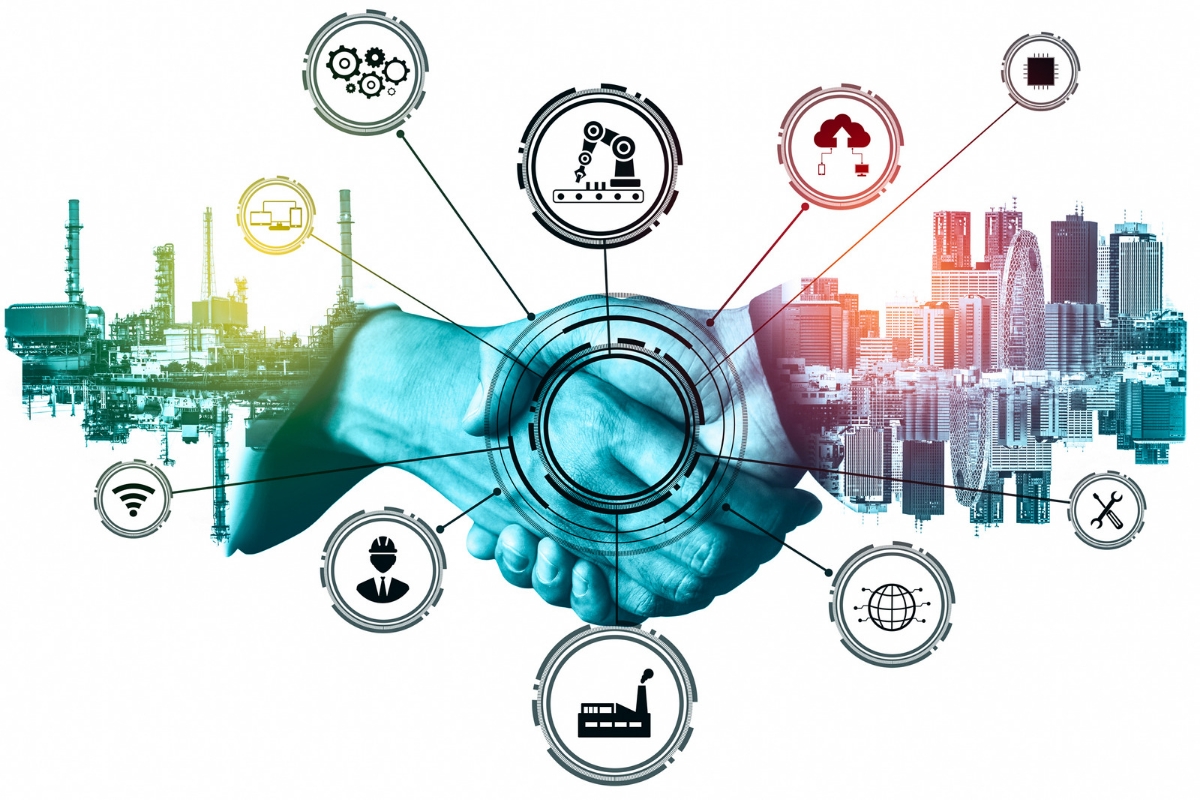
Today, as India embraces the fourth industrial revolution, Industry 4.0, it holds tremendous potential to propel the nation to new heights of industrial growth and economic prosperity. This digital revolution is characterized by the convergence of physical and digital technologies, paving the way for advancements in automation, artificial intelligence, data analytics, and the Internet of Things (IoT).
India’s Progress in Industry 4.0
India has already begun its journey into Industry 4.0, witnessing remarkable progress across various sectors:
- Manufacturing Sector: Industry 4.0 technologies are revolutionizing manufacturing processes, with robotics, automation, and additive manufacturing enabling increased productivity, efficiency, and quality control. India’s “Make in India” initiative has spurred domestic production and the adoption of advanced manufacturing techniques.
- Digital Transformation: The rapid expansion of digital infrastructure in India has laid the foundation for a connected ecosystem. With increasing internet penetration and the proliferation of smart devices, the country is embracing digital connectivity, enabling seamless data exchange and the integration of IoT technologies.
- Start-up Ecosystem: India’s vibrant start-up ecosystem is capitalizing on the opportunities presented by Industry 4.0. Emerging companies are leveraging AI, data analytics, and automation to develop innovative solutions across various sectors, including healthcare, agriculture, logistics, and finance.
- Government Initiatives: The Government of India is actively promoting digitalization and Industry 4.0 through initiatives such as Digital India, Skill India, and the National Policy on Electronics. These initiatives aim to foster digital literacy, skill development, and technological innovation to create an enabling environment for Industry 4.0 adoption.
As India’s industrial sector evolves through the industrial revolutions, Industry 4.0 emerges as a transformative force that promises to revolutionize the nation’s future. With its vast population, growing digital infrastructure, and a dynamic entrepreneurial ecosystem, India is well-positioned to embrace this digital revolution. By leveraging the power of advanced technologies, investing in skill development, and fostering collaboration between the government, industry, and academia, India can harness the potential of Industry 4.0 to drive sustainable economic


Leave A Comment